
Professional FAA Pilots vs. Recreational Fliers
Licensed Part 107 Pilots are the ONLY pilots approved by the FAA for commercial drone flight.
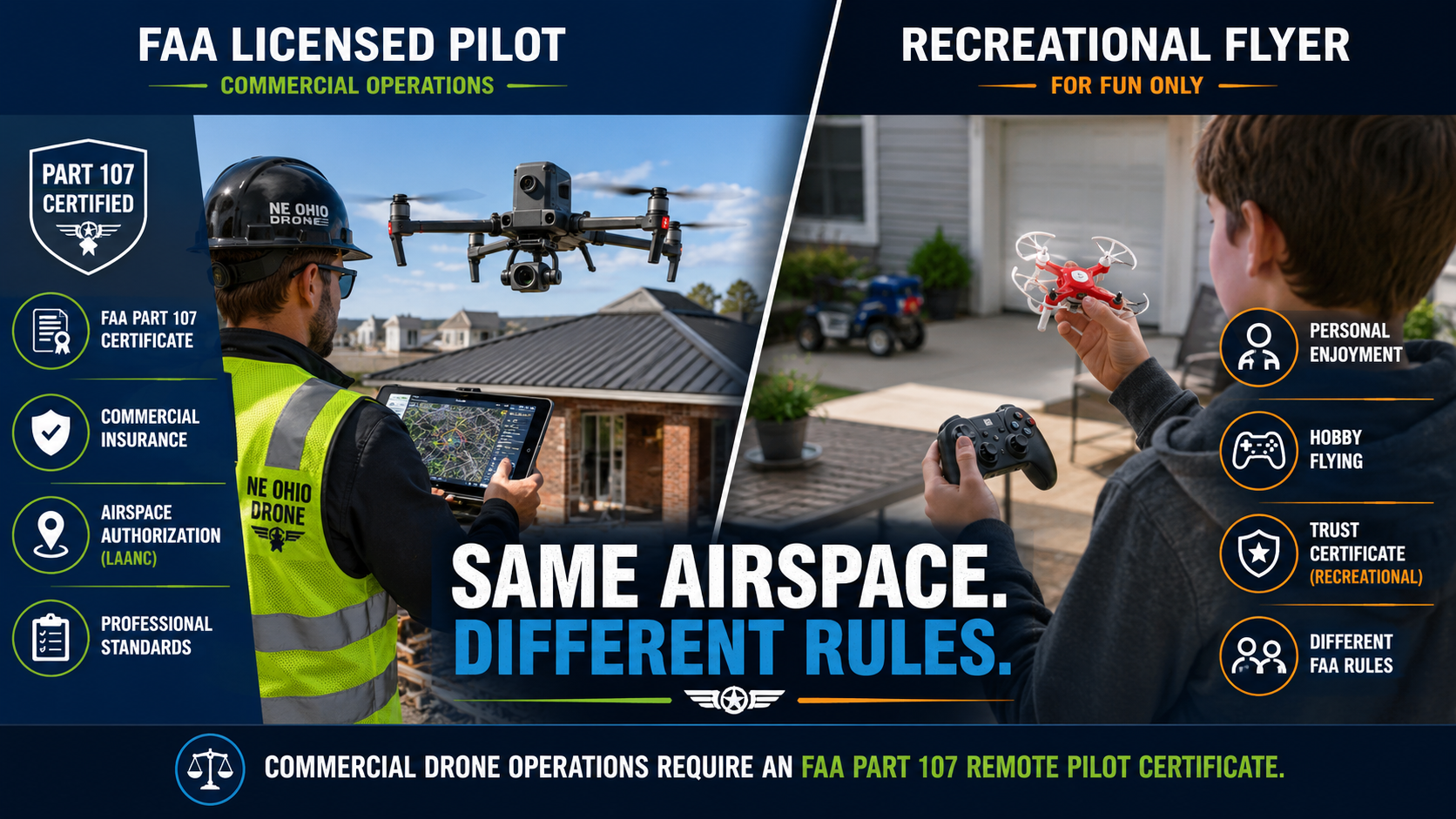
It may seem like the Wild West out there — anyone can buy a drone and take to the sky. But the FAA draws a clear and legally enforceable line: recreational fliers are authorized to fly for fun only. The moment a drone is used for any business purpose, a FAA Part 107 commercial certificate is required by law.
Only FAA Part 107 Licensed Pilots can:
-
Produce aerial photography or video for profit. Recreational fliers cannot legally sell, post commercially, or use drone footage for any business purpose. Only Part 107 licensed pilots are authorized to create and deliver aerial content for marketing, real estate, construction, inspections, or any other commercial application.
-
Fly in controlled airspace. Licensed pilots can obtain LAANC authorization from Air Traffic Control to fly legally inside controlled airport airspace. Flying in controlled airspace without authorization is a federal violation — regardless of whether the flight is commercial or recreational.
-
Carry commercial UAS liability insurance. Professional drone insurance policies are written for licensed Part 107 operators. Ed Rich carries $1 million in commercial UAS liability coverage on every flight. Unlicensed operators flying commercially will find their insurance coverage void in the event of a claim.
-
Fly at night. Night operations require FAA Part 107 authorization and anti-collision lighting visible for at least 3 statute miles. Standard drone lights do not meet this threshold. Licensed pilots plan and equip for night flight properly.
-
Fly over people and moving vehicles. Operations over people or moving traffic require specific FAA authorizations under Part 107 Subpart D. The drone must meet defined safety and performance standards. This is not a casual permission — it requires planning, documentation, and the right equipment.
-
Interpret aviation weather data. Licensed Part 107 pilots are trained and tested on reading METAR and TAF reports — the same weather data used by manned aircraft. Understanding wind, ceiling, and visibility conditions is a requirement of the license, not an option. When a project calls for additional crew members on the ground, a licensed Pilot in Command is responsible for briefing and managing that crew in accordance with FAA safety requirements.
⚠ Warnings: The Legal Consequences Are Real
Don't assume you are shielded from fines, liability, or lawsuits by hiring an unlicensed pilot.
Hiring an unlicensed drone pilot for commercial work exposes both the pilot and the hiring business to federal enforcement under 49 U.S. Code § 46306. Insurance coverage is likely void. Liability for property damage or injury falls on the parties involved.
Flying Commercially Without an FAA License
In addition to fines, the FAA may void your drone registration, issue cease and desist orders, and refer cases to the Department of Justice for criminal prosecution.
Failure to Register Your Drone with the FAA
Any drone weighing more than 250 grams (0.55 lbs) must be registered with the FAA. Penalties for flying unregistered:
- 1st offense: civil penalty up to $1,100
- 2nd offense: civil penalty up to $9,900
- 3rd offense and beyond: civil penalty up to $27,500
- Criminal prosecution: up to $250,000 and/or three years imprisonment
The FAA may also revoke registration and pursue civil forfeiture of the drone. Not sure if your drone needs to be registered? Check the FAA DroneZone.
Don't Ignore Remote ID
Remote ID is federal law and is actively enforced. All drones over 250 grams must broadcast identification and location data during flight. Penalties for non-compliance:
- Civil penalties up to $27,500 per violation
- Revocation of drone registration
- Imprisonment up to six months
- Cease and desist orders prohibiting further flight