
Why Weather is Important
Weather is not an inconvenience for drone pilots — it is a primary operational variable that determines whether a flight is safe, legal, and capable of producing quality results. Northeast Ohio's climate makes this especially true. Lake-effect conditions, rapidly changing wind patterns, low ceilings, and dense fog are part of doing business in this region. A licensed Part 107 pilot plans around all of it.
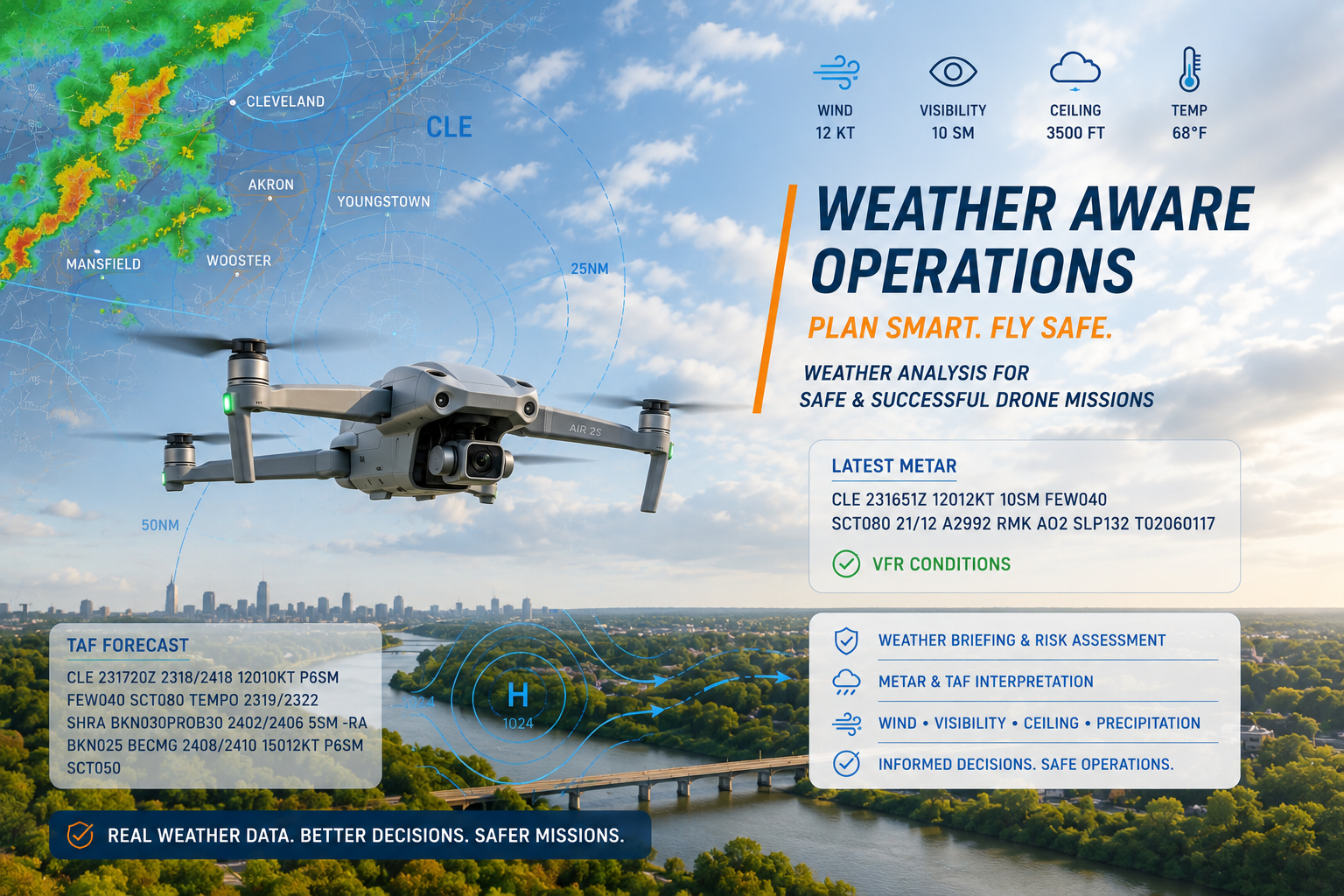
FAA Weather Minimums for Drone Flight
The FAA sets hard minimums for commercial drone operations under Part 107. These are not suggestions — flying outside these limits without a waiver is a federal violation:
| Condition | FAA Minimum Requirement |
|---|---|
| Flight visibility | 3 statute miles minimum |
| Distance from clouds | 500 ft below, 2,000 ft horizontally |
| Wind speed | Within manufacturer's rated limits for the aircraft |
| Precipitation | No flight in rain, snow, or conditions that could damage sensors |
| Night operations | Anti-collision lighting visible for 3 statute miles required |
Why Northeast Ohio Demands Extra Attention
Winter Operations — Cold Weather and Ice
Northeast Ohio winters introduce hazards that most drone operators outside this region never have to think about. Cold temperatures affect battery performance significantly — a battery that delivers 25 minutes of flight time in summer may yield 10 to 15 minutes in freezing conditions. Ed Rich accounts for this on every winter flight, carrying additional batteries and adjusting flight plans accordingly.
Ice is the more serious concern. Freezing drizzle, frost, or even high humidity at low temperatures can accumulate on propeller surfaces and disrupt the aerodynamics that keep a drone stable. Motor performance degrades. Sensors can be compromised. A drone that flies perfectly in October can behave unpredictably in January if the pilot hasn't prepared for it. Pre-flight inspection in cold weather includes checking for any ice or frost accumulation before every takeoff — and grounding the aircraft if conditions create unacceptable risk.
Cold weather also affects the camera and gimbal systems. Lubricants stiffen, gimbal motors work harder, and condensation can form on lenses when moving between cold outdoor air and warmer indoor environments. Managing this is part of operating professionally in a four-season climate.
When the Weather Says No
Part of being a professional is knowing when not to fly. If conditions don't meet FAA minimums — or if cold, ice, wind, or visibility introduce unacceptable risk to equipment, crew, or the quality of the final product — Ed Rich will reschedule. That commitment protects your project and your property, and it's what separates a licensed professional from someone who just looks up and goes.